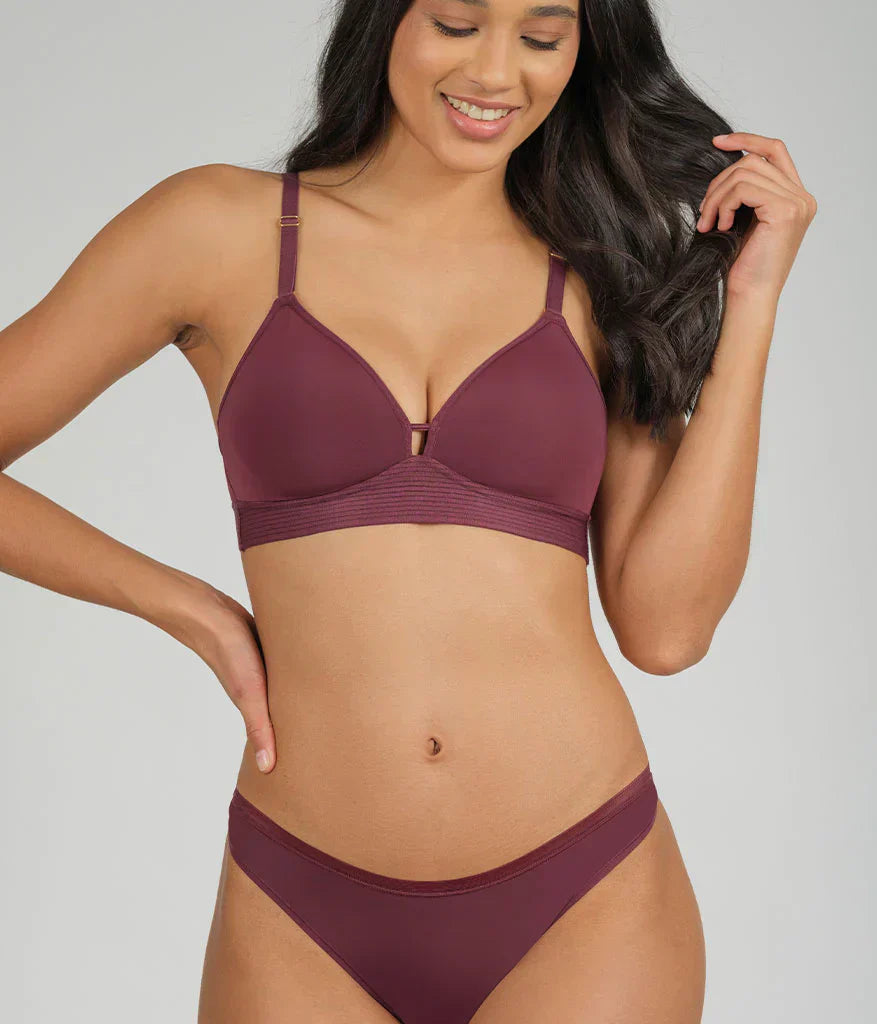

Finding your correct bra size can feel like solving a puzzle, especially when you fall outside the range that most retailers carry. If you’ve ever wondered about the M cup bra size, what it means, how to measure for it, and where to find bras that actually fit, you’re in the right place. This guide walks through everything from measurement techniques to style recommendations, helping you understand this less-common but perfectly valid size category.
What Is an M Cup Bra Size?
An M cup bra is an extremely large cup size that extends far beyond what most women encounter in everyday shopping. While sizes like D, DD, or even G might appear on department store racks, the M cup sits many steps higher in the alphabet, representing substantially more breast volume than these more familiar options.
The letter “M” refers specifically to cup volume, not to overall body size or frame. This distinction matters because a 32M and a 42M both feature very large cups, yet they fit completely different bodies. The same person wearing a 32M has a small rib cage with significant bust volume, while someone in a 42M has a larger torso. The cup letter describes the relationship between bust and band measurements, not a fixed amount of breast tissue.
In UK and US sizing systems, cup letters progress through a specific sequence: DD, E, F, FF, G, GG, H, HH, J, JJ, K, KK, L, then M, following the same basic principles that govern how bra cup sizes work and differ. However, availability varies dramatically by brand. Most mainstream high-street stores stop stocking well before reaching K, let alone M. This means that women requiring an M cup typically must turn to specialist brands and retailers who manufacture and carry these extended sizes.
Surveys and studies often cite that anywhere between 70-85% of women wear incorrectly fitted bras. Some signs of incorrectly fitted bras include the band digging into the torso or sliding upwards, red marks, shoulder or neck pain, and the breasts overflowing around the edges of the bra. If the straps dig into the shoulder, leaving red marks or causing shoulder or neck pain, the bra band is not offering enough support. If it digs into the flesh, causing the flesh to spill over the edges of the band, the band is too small. If the cups crease or are empty in some places, try a smaller cup size. Experts recommend that women, especially those whose cup sizes are D or larger, get a professional bra fitting from a lingerie department.
Finding yourself in the M cup range is neither unusual nor abnormal; it simply reflects your particular breast volume relative to your band measurement. Specialist manufacturers design specifically for these proportions, understanding the unique support requirements involved.
How Big Is an M Cup Compared to Other Sizes?
Cup letters represent progressive steps in breast volume, with each letter indicating a larger capacity than the one before it. There’s no universal fixed volume for any cup letter; instead, cups scale relative to the band size they accompany.
In UK and US inch-based systems, each cup step typically represents about one inch (approximately 2.5 cm) of difference between bust measurement and underbust measurement, the same basic method used in most comprehensive guides to understanding bra bust size. By the time you reach M cup territory, that difference lands in the 13-inch range (roughly 33 cm), though exact figures can vary by brand. For example, a 34M indicates approximately 13 inches between the underbust and bust measurements.
Cup volume also scales with band size, which sometimes surprises women new to extended sizing. A 34M holds less absolute volume than a 40M because the cup must accommodate a wider frame and distribute weight differently. The fabric requirements and structural engineering increase as bands get larger.
To put this in perspective: a 34M contains drastically more volume than a 34G, even though both might be described as “large” sizes. Moving from G to M involves passing through H, HH, J, JJ, K, KK, and L, each step adding measurably more capacity. Volumetric approximations from lingerie engineering suggest that an M cup may hold two to three times the breast tissue of a G cup in the same band size.
How to Measure for an M Cup Bra Size at Home
Standard online bra calculators frequently stop well before reaching M in their size ranges, making accurate manual measurements crucial for anyone who suspects they fall into extended cup territory. Taking your own measurements at home requires just a soft measuring tape and a few minutes of careful technique, especially if you want to follow the most accurate way to measure bra size.
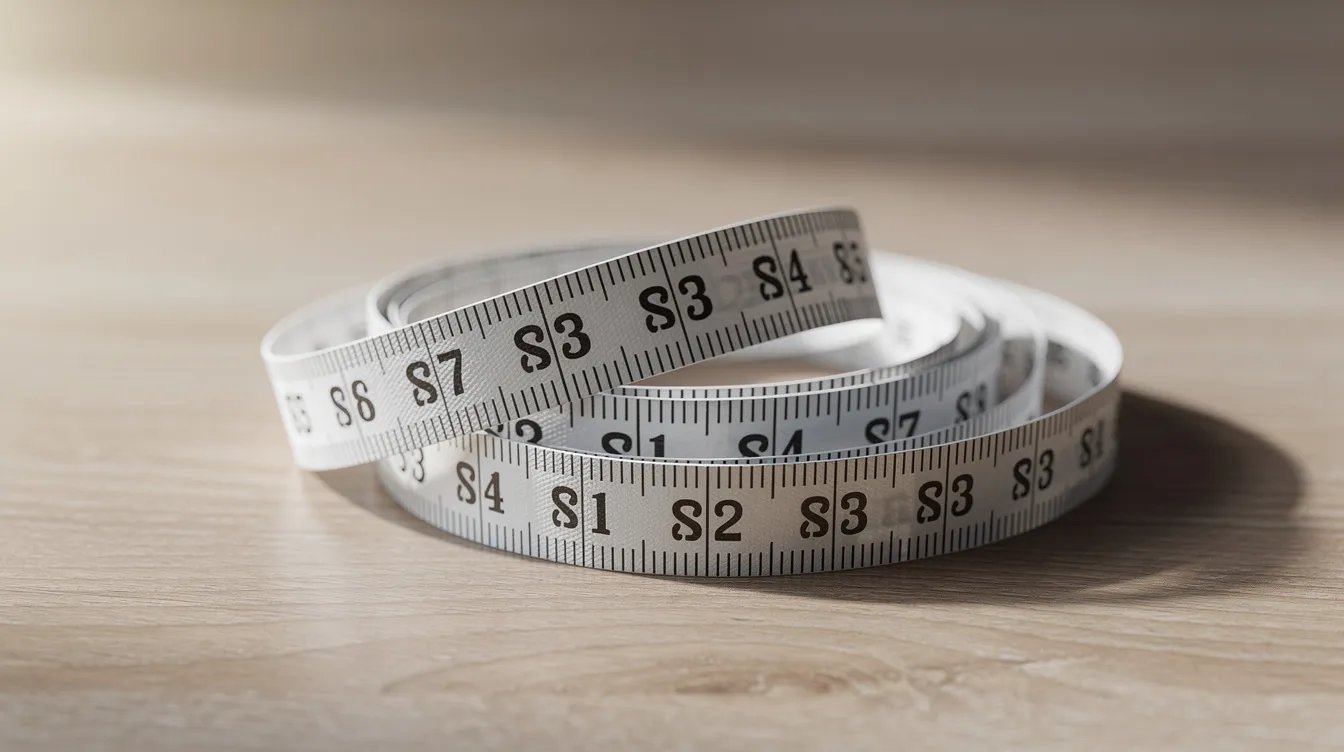
Step 1: Underbust Measurement
Stand with your arms relaxed at your sides and wrap the tape measure firmly around your rib cage, positioning it directly under your breasts. Keep the tape level all the way around your torso, not angled up or down. Pull snug enough that the tape stays in place without digging into skin. Record this number in both inches and cm for later conversion flexibility. This measurement determines your bra band size; most women round to the nearest even number if their measurement falls between sizes, mirroring expert advice on how to measure your band size for a bra.
Step 2: Bust Measurement
Position the tape around the fullest point of your bust, typically across the nipples. Keep the tape horizontal and parallel to the floor, standing straight helps prevent measurement skewing from poor posture. Measure loosely rather than pulling tight; you want to capture your full bust size without compressing tissue. Again, record in both inches and cm.
Step 3: Calculate the Difference
Subtract your underbust measurement from your bust measurement. In inch-based systems, each inch of difference represents approximately one cup step. Very large differences, often 12 inches or more, can fall into J, K, L, or M territory depending on the specific bra size chart you’re referencing, so it helps to compare your numbers against a detailed bra size guide for understanding cup size.
When measuring for a bra, it is best to take the bust measurement while wearing a lightly lined bra that fits well. A correctly fitting bra should allow you to slip two fingers under the band when it is fastened at the middle hooks.
Cross-check your results against an extended-size chart from a specialist brand that lists cups up to at least M. Many general retailers truncate their charts at H or J, which won’t help you find your approximate fit if you measure larger. Repeat the measurement process three to five times for consistency, and consider measuring at the end of the day when breasts are at their fullest due to normal diurnal fluctuation.
Signs You Might Need an M Cup (or Other Very Large Cup)
Many women who actually need M cup volumes have spent years squeezed into smaller cups like F through H, often paired with overly large bands that seem to “make up” for the missing cup room. If your current bras never quite feel right despite trying multiple sizes, certain symptoms can indicate the problem lies in wearing too small a cup.
Classic signs of insufficient cup volume include:
- Significant spillage over the top or sides of the cup (sometimes called “quad-boob”)
- Underwire sitting directly on breast tissue rather than encircling it
- The bra’s center panel (gore) never lying flat against your chest
- A double-boob effect visible through clothing
- Red marks or irritation where cups press into tissue
Meanwhile, signs of a too-large band include the band rides up at the back rather than staying horizontal, needing to use the tightest hook from day one, and feeling like shoulder straps dig and do all the supportive work. When straps bear most of the weight, they create grooves in your shoulders while the band fails to anchor properly around your torso.
Someone who believes they wear a 40G but shows these symptoms might more accurately measure closer to a 34K or 34M range, just as someone questioning whether 36C is “big” may benefit from a clearer understanding of bra size 36C and what it means. The most common mistake involves compensating for cup shortage by going up in band, a strategy that undermines support rather than improving it. Needing an M cup simply reflects breast volume; embracing better fit typically improves posture, reduces discomfort, and makes clothing fit more smoothly.
International Conversions for M Cup Sizes
Bra sizing has no universal global standard, which means an “M cup” appears differently or sometimes not at all, across UK, US, EU, and other international systems. Understanding these variations becomes essential when shopping from brands based in different countries.
In most European countries using centimeter based charts, very large cups often employ single letters only and may stop before reaching M. Where UK sizing might show 34M, an EU chart might approximate this as a 75 with a very high cup letter like L or possibly K, depending on the brand. The difference in bust and band that constitutes each cup step varies slightly between European sizes and UK sizes, making direct letter-to-letter conversion imprecise.
French and Spanish band sizes typically run 15 cm higher than standard EU bands, for example, EU 75 corresponds to FR 90. Large cups in these systems may not carry the M designation at all, instead using whatever high single letter the brand’s chart reaches, which also affects how intermediate sizes like E cup bra sizes are defined and perceived. When shopping French lingerie, you’ll often need to convert both band and cup separately.
Australian and New Zealand brands sometimes follow UK progression and extend to M, while others align more closely with EU conventions and cap at lower letters. This inconsistency makes brand-specific conversion charts indispensable. Before ordering internationally, always locate the retailer’s own size guide and measure yourself against their specific instructions rather than assuming your UK 34M translates directly.
Sister Sizes and M Cup Bras
Sister sizes refer to different band and cup combinations that share similar cup volume. For example, 30M, 32L, and 34K might hold comparable cup volumes, though each fits a different body circumference. Understanding this relationship proves particularly valuable when shopping for M cups.
For very large sizes like M, sister sizing often becomes necessary because exact band-cup combinations are rarely stocked, especially in local retail environments. If you measure as a 32M but can only find 34L in stock, you might try that sister size to maintain approximate volume while accepting a slightly different fit, much as someone in a bra cup size 32D might explore neighboring sister sizes to fine-tune comfort.
The mechanism works by moving one band size up and one cup letter down (or vice versa) to preserve cup volume. If your true size is 30M and you can’t locate it, trying 32L maintains similar cup capacity on a band that runs one size larger. Moving the other direction to 28N if it exists, would give you a tighter band with the same cup volume.
However, sister sizes serve as a tool rather than a replacement for accurate band fit. A too-big band, even with correct cup volume, cannot provide proper support for heavy breasts. The band should contribute 70 to 90 percent of a bra’s support; when it’s too loose, weight shifts onto shoulder straps, creating discomfort and undermining the entire structure. Use sister sizing strategically when shopping, but prioritize finding your true band size whenever possible.
Fit Challenges Specific to M Cup Bras
Supporting very heavy breasts presents genuine engineering challenges that intensify as cup sizes increase. Both band and cup design must work together to manage the weight that can exceed several kilograms per breast, and not every bra construction accomplishes this successfully.
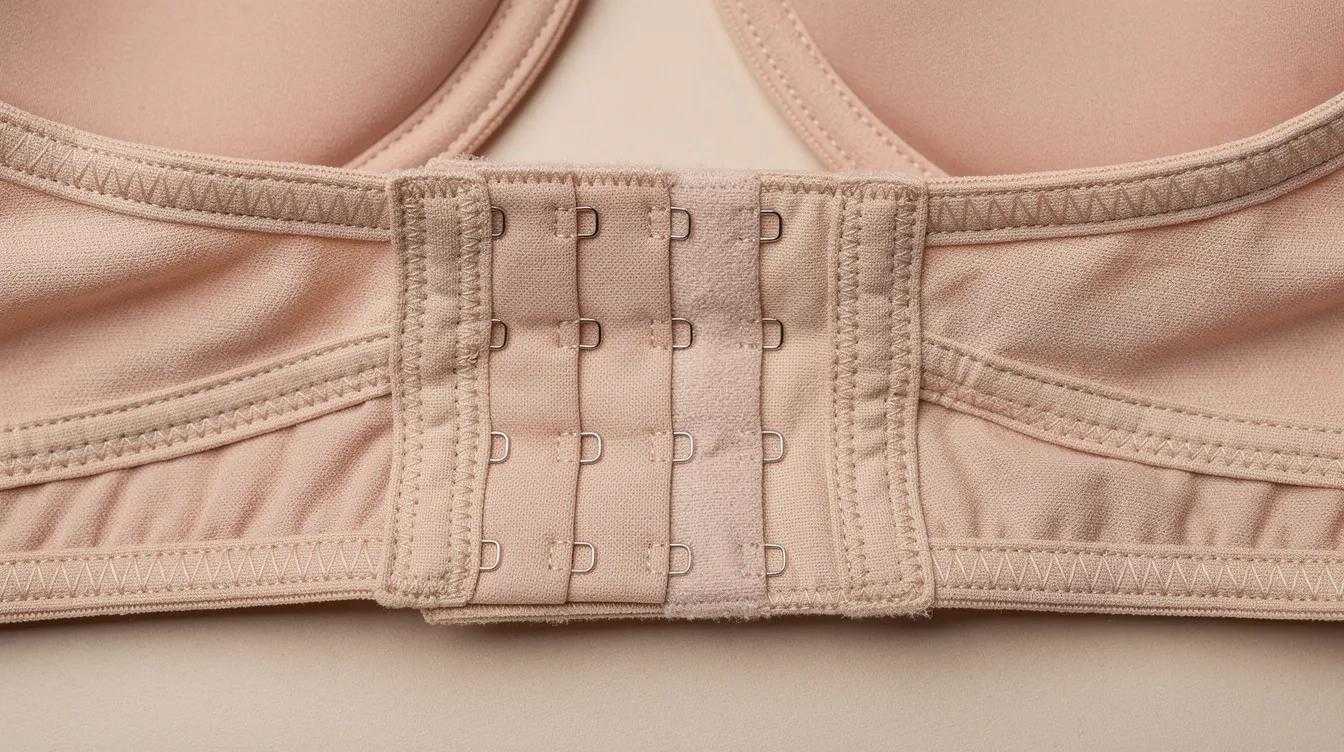
Common issues at M cup volumes include straps that dig into shoulders despite adjustment, leaving grooves that can measure one to two centimeters deep over time. Underwire may distort or bow outward under the torque of heavy tissue, losing its intended shape and poking uncomfortably. The center gore often floats rather than tacking flat against the sternum, particularly for women with close-set breasts. Cups may collapse, wrinkle near the top, or fail to maintain their shape throughout the day.
Breast shape matters even more at M cup volumes than at smaller sizes. Whether you’re full on top, full on bottom, projected versus shallow, or close-set versus wide-set affects which brands and styles work for your body. A bra that fits one M cup wearer beautifully might gap or squeeze another, purely due to shape differences.
Manufacturing tolerances and lack of standardization increase as sizes get larger, so a 36M from one brand may not match a 36M from another. Pattern scaling introduces differences of half an inch to two inches between manufacturers. Many people in this size range benefit from professional fitting at boutiques specializing in large cup bras, or from ordering multiple sizes online and returning what doesn’t work.
Choosing the Right M Cup Bra Style
Not every bra silhouette provides adequate support at M cup volume. Style affects stability, and certain designs inherently manage heavy breasts better than others.
Full-cup styles with firm side support panels often prove the most stable choice for M cups. These designs encapsulate breast tissue fully, preventing lateral slip and keeping everything centered. Balconette styles can work well when they include strong underwire and reinforced lower cups, though very low-cut variations may lack sufficient coverage.
Plunge bras and low-coverage designs typically struggle at M cup volumes. The reduced fabric simply cannot contain or support heavy tissue effectively, leading to spillage and instability. Similarly, bralettes and wire-free options rarely provide adequate lift unless specifically engineered for full busts, though some women may prefer comfortable and supportive alternatives to traditional bras for lounging or low-impact wear.
For high-impact activities like running or aerobics, an encapsulation sports bra designed specifically for very large cups outperforms simple compression styles. Encapsulation separates and supports each breast individually, reducing bounce by up to 70 percent compared to compression alone.
Design details to seek include wide and firm bands with three or more hook closures, padded or wide straps that distribute pressure across more shoulder surface, strong underwire that won’t flex under weight, reinforced seams, and non-stretch lower cup sections. These elements work together to manage the xl weight requirements of M cup breasts.
Molded T-shirt bras in M cup are less common because seamless construction at this volume presents significant engineering complexity. Cut-and-sewn cups with seams provide better lift and shape, and represent what most specialist brands produce for extended sizes.
Where Can You Buy M Cup Bras?
Mainstream retail chains rarely stock M cups, leaving shoppers to rely on specialist retailers and online stores that focus specifically on extended sizing. This reality can feel frustrating initially, but often leads to discovering higher-quality options than typical mall fare.
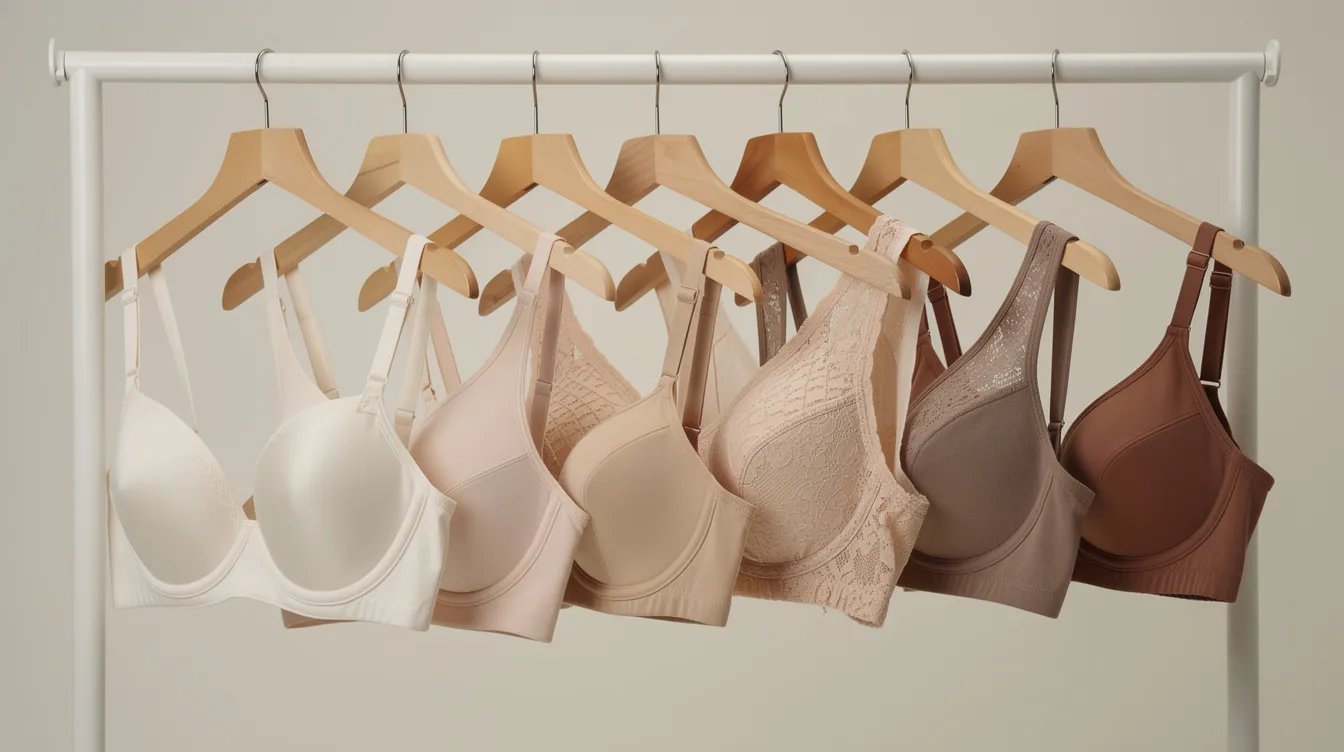
Dedicated large-cup lingerie boutiques exist in many major cities and often carry extended UK sizes up to at least K or M in select brands. These shops provide the advantage of hands-on fitting with knowledgeable staff who understand the challenges of very large cups. If you can locate one within a reasonable distance, an in-person visit can save considerable trial and error.
Online retailers focusing on full-bust and plus-size bras typically offer the widest selection of M cup sizes across various band combinations. Many carry inventory that physical stores simply cannot match due to the space required to stock every size variation. Look for retailers with clear size charts; some use UK sizing, while others apply EU or proprietary systems for high cup letters.
Return policies matter significantly at this size range. Expect to order multiple sister sizes or variations to find your perfect fit, then return those that don’t work. Retailers with generous return windows (30 to 60 days) and free or affordable return shipping make this process more manageable. Pay attention to specific fabric compositions and underwire styles noted in product descriptions, as these details affect comfort and longevity.
Health, Comfort, and Posture for M Cup Wearers
Very large, unsupported breasts can contribute to discomfort in the back, neck pain, and shoulder strain over time. The weight pulling forward affects posture and can lead to compensatory changes in how you hold your body throughout the day.
A properly fitted bra with a firm band shifts weight distribution from the shoulders to the torso, where the larger muscle groups and skeletal structure can better handle the load. When the band does its job, carrying 70 to 90 percent of support, the straps merely position rather than lift. This redistribution often improves posture and reduces the muscle fatigue that accumulates through daily activities.
Common issues for M cup wearers include shoulder grooving from straps that are too narrow or too tight, skin irritation or rashes in the inframammary fold where skin contacts skin or wet fabric, and difficulty exercising comfortably when support proves inadequate. Incorrectly fitted bras exacerbate all of these problems.
While a bra cannot cure structural spine or joint conditions, better support frequently makes day-to-day movement more comfortable and can encourage more physical activity, which itself benefits overall health. Women who’ve worn incorrect sizes for years often report significant relief upon switching to properly fitted, supportive bras, whether they wear an M cup or a more common size like a D-cup bra with a correct fit.
If discomfort persists even after improving bra fit, consider consulting a physiotherapist or medical professional. Chronic pain may have multiple contributing factors that extend beyond lingerie.
Frequently Asked Questions About M Cup Bra Size
Is an M cup bra size rare?
M cups are uncommon in general retail, but not unheard of. Estimates suggest that only about 0.5 to 2 percent of women fall into the J through M range globally. Specialist brands manufacture these sizes specifically, so while you won’t find them at typical department stores, they absolutely exist and are worn by real people every day.
Can my size change from K to M over time?
Yes, bra sizes fluctuate due to weight changes, hormonal shifts, pregnancy, breastfeeding, and natural aging. A variance of one to three cup sizes throughout life is entirely normal. Significant weight gain or loss (roughly 10 pounds or more) often shifts cup size by at least one letter. Regular re-measurement helps ensure you’re always wearing your current correct bra size.
Why does one brand’s M cup feel smaller than another’s?
Lack of standardization means that brands use slightly different pattern scaling and cup depth calculations. Tolerances of half an inch to two inches exist between manufacturers, so a 36M from one company may not match another’s 36M at all. Always consult brand-specific charts and expect some variation when trying new labels.
What if I can’t find an M cup anywhere?
If your exact size proves unavailable, sister sizing offers the first alternative; try moving one band size up and one cup down (or vice versa) to maintain volume. Semi-custom or custom options exist from some specialist manufacturers who can adjust wire length, band width, or cup depth. Online communities focused on full-bust fitting aggregate sizing data across hundreds of brands and can point you toward lesser-known options. Two fingers of flexibility in both band and cup choices often expand your available selection considerably.
How do I know if my bra band size is correct?
The band should sit level around your torso without riding up at the back. You should be able to slip two fingers under the band comfortably, but not more. On a new bra, you should start on the loosest hook, leaving tighter hooks for when the fabric and elastic naturally stretch over time. If you need the tightest hook immediately or the band slides up throughout the day, try going down a band size.